
Caring for Lacquered Wooden Tableware
Lacquered wooden tableware has been used throughout Asia for generations and remains highly valued for its natural warmth, lightweight feel, and distinctive grain patterns. Products crafted from wood, including noodle bowls, rice bowls, tea cups, matcha accessories, and bento boxes, bring a softer and more organic character to the dining experience compared to ceramic, glass, melamine, or plastic alternatives.
Table of Contents
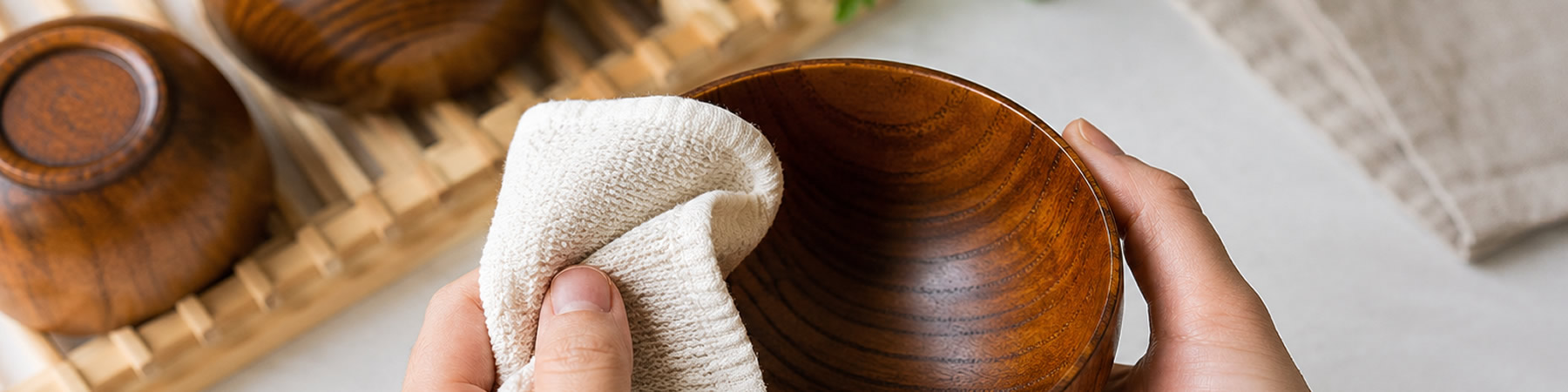
Unlike ceramic or plastic tableware, wooden products are made from natural timber and require more careful maintenance and ongoing care to help preserve their appearance and finish over time. This is an important part of owning authentic wooden tableware and should be expected with natural materials.
Understanding Natural Changes in Wooden Tableware
Because wood is a natural material, every piece contains unique grain patterns, colour variations, and densities within the timber itself. Over time, exposure to moisture, heat, oils, acidic foods, detergents, and regular handling may gradually alter the appearance of both the lacquer coating and the timber beneath.
This can include slight darkening or lightening, more visible grain patterns, changes in sheen or surface texture, and minor discoloration or tonal variation.
Some level of discoloration is not uncommon with lacquered wooden products and is generally considered part of the natural ageing process rather than a manufacturing fault. Each bowl or cup will also age differently depending on how frequently it is used and maintained.
The lacquer coating itself may soften slightly with regular washing and daily use, allowing the timber to develop a richer and more mature appearance over time. Many people appreciate these gradual changes as part of the natural beauty and individuality of wooden dining ware.
Why Wooden Tableware Requires Different Care
It is important to understand that lacquered wooden products are not maintenance-free like ceramic or plastic tableware. Wooden bowls and cups require gentler handling and more regular care to help protect both the lacquer finish and the natural timber beneath.
Dishwashers, soaking, excessive heat, and harsh detergents can gradually damage the lacquer coating, dry out the timber, and contribute to discoloration, fading, or warping. Proper maintenance plays a major role in preserving the appearance and longevity of wooden dining ware.
Recommended Care Instructions
To help maintain lacquered wooden tableware, we recommend:
- Hand wash only using lukewarm water
- Use a mild detergent
- Clean gently with a soft cloth or sponge
- Dry immediately after washing
- Store in a cool, dry location
Avoid:
- Dishwashers
- Microwaves
- Ovens
- Soaking in water
- Abrasive scrubbers
- Harsh cleaning chemicals
- Prolonged exposure to direct sunlight
- Leaving liquids sitting inside for extended periods
Occasionally applying a very small amount of food-safe mineral oil with a soft cloth may also help nourish the timber and maintain the bowl’s smooth finish.
Appreciating the Character of Natural Timber
Part of the appeal of lacquered wooden tableware is its evolving appearance. Unlike manufactured materials that remain mostly unchanged, genuine wooden bowls gradually develop their own unique character through everyday use. Small variations in colour, grain, and finish all contribute to the authenticity and warmth that make wooden dining ware so highly regarded.
With proper care and maintenance, wood bowls, tea cups, matcha accessories, and wooden bento boxes can continue to provide many years of enjoyable everyday use while retaining their traditional beauty and craftsmanship.
