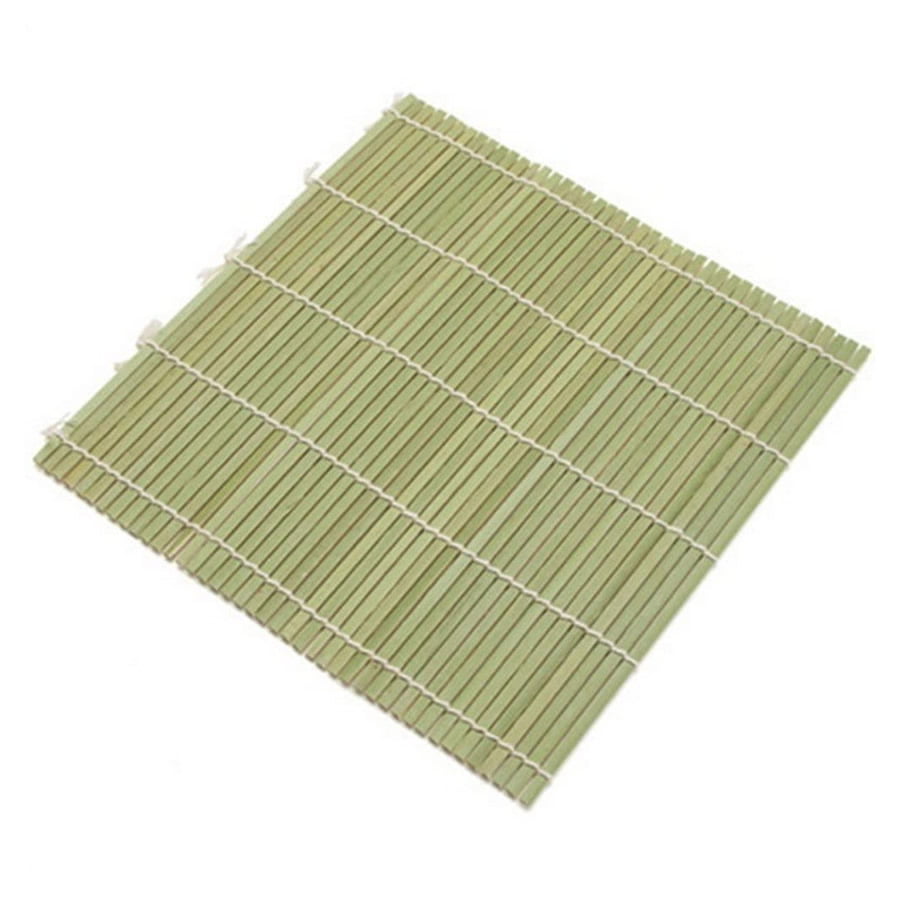
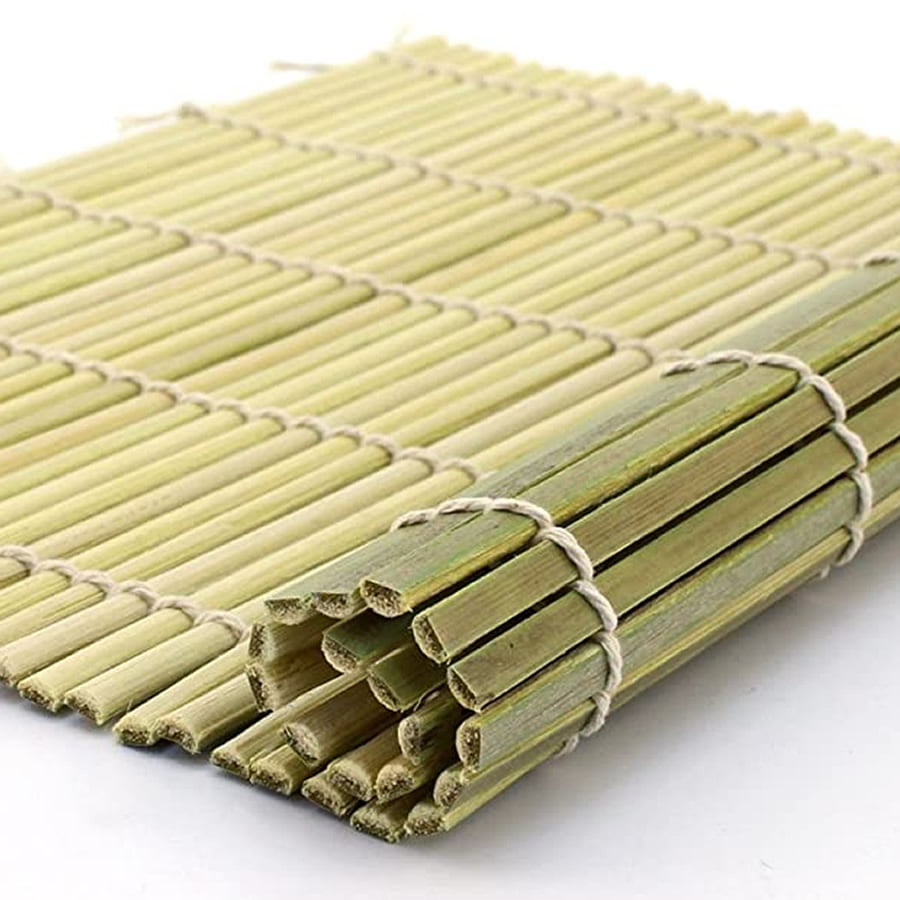
The Bamboo Sushi Roller Mat measures 240mm x 240mm made from durable and long-lasting bamboo. Each mat is constructed from bamboo matchstick rods weaved with cotton string. High-quality, long-lasting, and chemical-free (no varnish). Hand wash is recommended, for optimal results. When rolling sushi, a bamboo mat is utilised to keep uniform pressure on all sides of the roll.
The bamboo’s flatform is simple to use and produces remarkable results. Sushi is finest when it’s cooked fresh, and rolling your own is a lot of fun. Here’s how to create a sushi roll.
How to make Bamboo Sushi Roller Mat
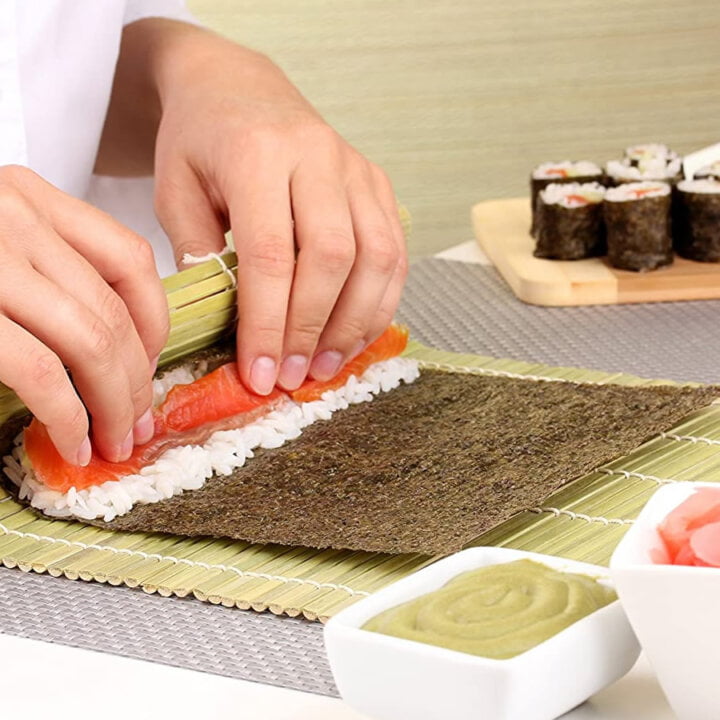
Step 1: Sushi rice should be prepared according to the package guidelines. Place a sushi mat with the slats running horizontally on a clean work area. Place a nori sheet on the mat, shiny side down, 2cm from the closest edge. Spread a thin layer of rice evenly over the nori sheet with damp hands, leaving a 3cm-wide border at the far side. Place the ingredients in the centre of the rice, such as canned tuna or thin strips of avocado, cucumber, carrot, and capsicum.
Step 2: Pick up the edge of the mat nearest to you with your thumbs and forefingers. While rolling the mat over to encompass it, use your other fingers to grasp the filling. To make a firm roll, gently pull the mat as you go.
Step 3: Continue rolling until the nori has completely coated the rice and you have a nice roll. To gently tighten the roll, wrap your hands around the mat. To cut into pieces, use a wet sharp knife. Serve with soy sauce and sushi on a serving plate.
Makisu Futokuchi
A Makisu Futokuchi Bamboo Sushi Roller Ma is a woven bamboo and cotton string mat used in Japanese cookery for food preparation. Makisu is most typically used to produce makizushi, a type of wrapped sushi, but they can also be used to shape other soft meals like omelettes and squeeze excess liquid from food. Typically they measure 240mm x 240mm in size, however, this can vary. There are two types of bamboo strips: thick bamboo strips and thin bamboo strips. The thick mat is more multipurpose, according to experts, whereas the thin mat is meant exclusively for makizushi. These mats are available in a variety of sizes.
To prevent the formation of bacteria and fungi, a makisu should be properly air-dried after each usage. To make cleaning easier, some cooks wrap the makisu with plastic film before using it. This is especially important when making uramaki, which is a type of maki sushi where the rice is on the outside of the roll. Makisu is inexpensive, therefore they can be discarded after each usage.
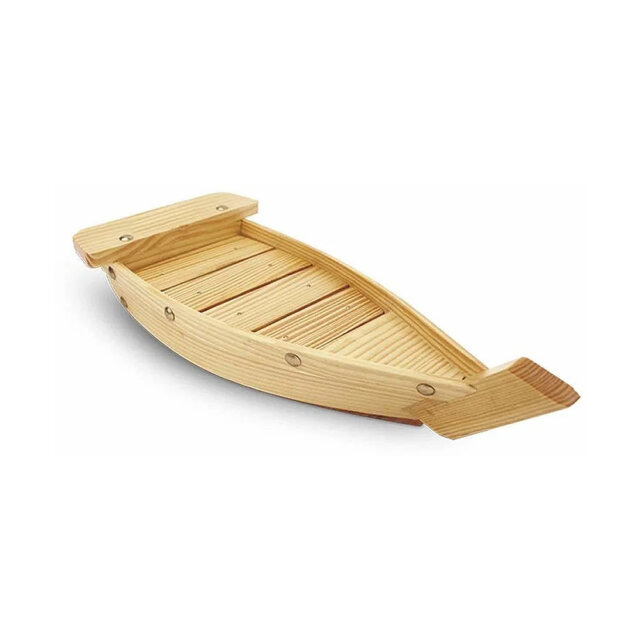
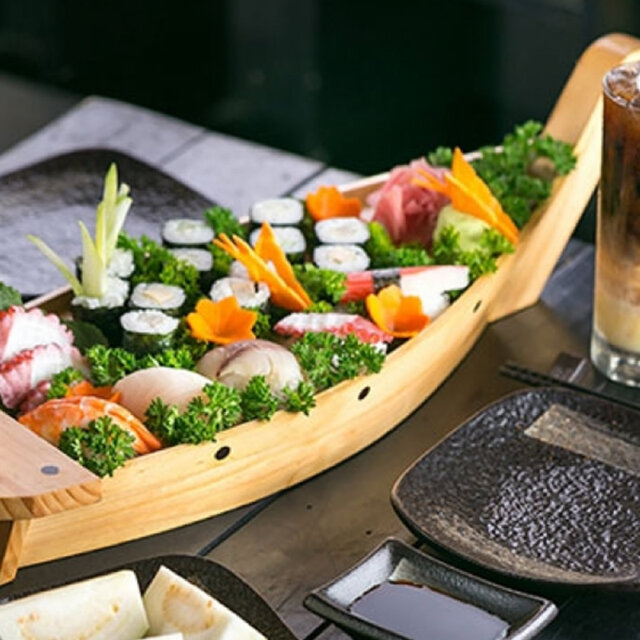
Found this product interesting, why not view our collection of Sushi Trays & Platters or read more about the humble sushi history at Wikipedia.org.
Due to manual measurement, please allow a 0-3cm error. Because of the differences in displays, the photo may not accurately reflect the item’s true colour.






Reviews
Be the first to review this product.